Saturday, 9 February 2013

Straight from the horse's mouth: why gluten-free eaters should be troubled by the British meat scandal

I'm so hungry I could eat a horse... no wait, I just did.

If you've been following the British horse meat scandal in the news, you've had your fill of equine jokes by now. For those new to the drama, supermarkets in the United Kingdom are under scrutiny after discoveries that horse DNA has been found in budget mincemeat and that in some products, it made up 30% to 100% of the supposed beef mince. And that's not a neigh-gligible proportion (sorry).

Honestly, fellas - it wasn't personal. Don't give me that look!
'Horses' by David Feltcamp. CC BY 2.0
Horse isn't something that graces the British dinner table often, and we can put that down to culture and geography. Personally, I don't believe there's even a smidgen of superiority to be enjoyed in eating one animal and not another (barring endangered species). You won't find me decrying dogs being eaten in China, or weeping over poor old dobbin as I peruse the donkey meat sausages in a French supermarket. Ultimately, eating meat involves participation in an industry that farms, kills and eats living creatures en masse; if we're meat eaters, we aren't in a position to tut at a different nation's cuisine because an animal we personally find endearing is being eaten. (Especially if you are - like me - a consumer of pork. I mean, just look at these guys. It's a moral nightmare.) 'Normality' in a cuisine depends on what is available. And that might well be horse (of course).

Let's hope these aren't from a British supermarket.
'Burgers and Kebabs' by Jem Stone. CC BY 2.0
So if I'm not squeamish about horse meat per se, why am I writing about it? Well, this isn't a matter of delicate British palates being offended by an unexpected newcomer to their tried-and-trusted diets. It's that through incompetence or cost-cutting, consumers were deceived about the contents of their food. People were eating one thing, thinking it was another. And as a gluten-free eater, you know where I'm going with this: if your health depends on non-consumption of certain foods, hearing that the labelling of food can't be trusted is rotten news.

Gluten-free eaters (and followers of other special diets) put a good amount of trust in products labelled specifically as free-from. But plenty of us also eat products outside the specifically labelled free-from section (although I know plenty of coeliacs are sensitive enough to steer clear). For me, if chocolate doesn't list gluteny products in its ingredients, I will probably feel safe eating it. For me, it doesn't have to come from a specifically gluten-free brand; if you say there's no wheat in there, my best guess would be that there is no wheat in there. Because why on earth would you lie about that?

One of you better be gluten-free.
'Chocolate treats' by Robyn Jay. CC BY-SA 2.0
One of the more unpleasant opinions being aired about the horse meat scandal is that anyone who buys ultra-budget meat products shouldn't really expect better. We all make tasteless jokes about value-branded sausages containing rat, pigeon or chicken feet - but in reality, the idea that we should pay higher prices for the privilege of being told what is in the very food that we eat is a repugnant one. (Not to mention a kick in the teeth for gluten-free eaters, who already pay premium prices for food they can safely eat.) If traceability of the contents of food products would add an extra cost that some consumers are unwilling or unable to absorb, then at least give a disclaimer ('may contain wheat'; or 'may contain other kinds of red meat').

So what's next for the gluten-free eater, whose food paranoia has been ignited by the scandal? Do I spend my days firing concerned letters off to food manufacturers, to ask if there's any stealth wheat in their supposedly gluten-less chocolate? Do I avoid mass-produced brands where there's more potential for supplier or factory failures in the long chain between when their food is made and when it reaches my plate? I can only hope that the breaking of this scandal in the UK is a warning klaxon for food manufacturers to up their game and be accountable for what they dish up - basically, to stop horsing around.

Do you trust the labels on your food? Let me know in the comments!

Sunday, 23 December 2012

"Just peel off the batter": party catering nightmares of gluten-free eaters

Nothing strikes fear into the heart of a coeliac quite like canapes. 

These seemingly innocuous nuggets of food are the party caterer's dream: dainty finger food that can be slung into an oven and brought out en masse to line the stomachs of booze-drenched party-goers (no doubt saving more than one office party from a sorry drunken end). But for those who eat gluten-free, party catering is a pain. Canapes are almost always on a bed of wheat, encrusted in wheaty pastry or slathered onto bread. Mass-produced finger food is very coeliac unfriendly, so those vol-au-vents, mini-hamburgers and battery tempura make my heart sink. They make me yearn for the days of retro snacks like cheese and pineapple on sticks. 

Evil, evil things. Just give me the salmon and ham!
Image by sushiĆ¢™¥in, CC Attribution
So in the midst of Christmas party season, plenty of gluten-free eaters will be a little nervous about what awaits them. We can only pray for carrot sticks and hummus, the safe refuge of a cheese board, or bank on our cast-iron drinking skills to see us through the night.

Being a prepared sort of coeliac, I saw the canape storm coming, but forewarning the party organiser seemed to fall on deaf ears this time around. I'd sent an FYI about my special diet with the original RSVP weeks before, but I also followed up a few days before the night.

"None of the party food is gluten-free," the organiser told me. 

Naturally, I responded with dozens of links to food that would be fine for me and the other gluten-free guests: sushi, cheeses, hams, a mini-roast, veggies, cold meats, panna cottas... a mouth-watering line-up. But alas, there was mysteriously "no time" to acquire such goodies as these. 

Yep, this is all you'll be eating. If you're LUCKY.
Image by Jules MorganCC Attribution
It does mystify me somewhat when naturally gluten-free goodies that are readily available sudden acquire an aura of unattainability in the context of catering. While I could pop down to a supermarket and have an armful of gluten-free snacks in mere minutes, I've met a number of party organisers and caterers who tell me sorrowfully how unable they are to cater for gluten-free eaters. (Is it fear of being sued, is it reluctance to do a quick Google search on 'gluten' -- maybe someone in the industry can tell me in the comments.) But in this case, I sensed the reluctance and just asked for cheese. Even the most rushed and coeliac-unfriendly party-planner can hopefully add some cheddar to their to-do list.

But if only the conversation had ended at cheese.

"There'll be plenty of vegetable tempura, which is only covered in a thin layer of flour," she added helpfully. "You could peel off the layer of flour and eat those." 

I was amazed. Firstly, wouldn't it just be simpler to have some non-breaded veggies in the first place? (Carrot sticks aren't hard to come by, unless there's been a rush on them this Christmas!) And secondly, did she really want to see me (and the two other gluten-free party-goers) sorrowfully picking apart scraps from the buffet because there was nothing else for us to eat? Maybe I could even soap off the floury coating with some Fairy liquid, to make sure they were truly safe to eat! Genius!

Cupcakes make me happy.
Image by albastrica mititica, CC Attribution
My wonderful Wheaty Eater encapsulated this absurdity nicely when I vented my frustration:

Vegetarians should just not eat the meat of their steak and mushroom sauce.
Peanut allergy suffers should just scrape off the satay sauce from the chicken skewers.
Alcoholics should just boil the champagne, capture and cool the water vapour and redirect it to a jug, then pour themselves a new glass. 

So I did what any slighted coeliac would do: I headed straight to the Hummingbird Bakery for a mountain of made-without cupcakes -- creamy cheese frosted red velvet cakes, star-spangled vanilla buns -- and slammed them down at this party, sharing them with coeliacs and non-coeliacs alike (best treats on the buffet by far).

Now, I don't expect venues and restaurants to have gluten-free goodies up their sleeve at the drop of a hat. But with plenty of notice, and for a party catering to a group where THREE guests are coeliac, I do expect this to be taken into account. Carrot sticks, cheeses, meats and veggies aren't rocket science. Ultimately, if you are happy to sit back and watch three of your guests peeling tempura and praying it doesn't make them sick, you aren't much of a host. 

Sunday, 7 October 2012

When gluten-free substitutes go bad

If you know me, or have read my blog, you'll know I don't waste much energy moaning about gluten-free food. The industry has moved on from concrete-blocks of bread and muddy-tasting pastas, towards fantastic gf baked goods, innovative recipes and products that are indiscernible from their wheaty brethren.

But this isn't to say that you don't occasionally find a gluten-free product so bizarre or tasteless that a hushed silence sweeps across the dining room table. It pains me to give a bad review to this couscous substitute, but I was almost in awe of how badly it turned out.

Couscous is a sneaky one for coeliacs. It doesn't immediately scream 'gluten' but it's made from a crushed form of wheat. It's not a forbidden carb that I've mourned - I tend to substitute quinoa if I fancy something with a couscousy texture, and I find saffron-tinged rice goes great with Moroccan style tagines. But I still snapped up a packet of gluten-free couscous-alike when I saw it on sale in a French supermarket. Made from 100% rice but with the fluffy texture of couscous: worth a try, right?

The first clue of a culinary disaster in the making was the cooking phase. Those plump little nodules of faux couscous seemed to disappear into a foaming mess of starchy water as soon as the temperature rose. Gluten-free pastas are sometimes guilty of being extra starchy, and needing an extra rinse to rid themselves of a gloopy coating, but this churning cloudy liquid was something else.

Worse, those couscous grains were impossible to free from the soapy-looking froth. My best effort to drain and strain the sticky stuff came to nothing. Nothing except ruining my shiny sieve and leaving me with an evening of brillo-padding the living hell out of the saucepans ruined by this tar-textured food experiment. It remained stubbornly soupy, and was so water-clogged it needed its own little ramekin to be served in, to stop it from splurging all over the rest of the plate, like a creeping evil slime.

Should have stuck with rice.
Pic by Effervescent Elephant,
CC Attribution-ShareAlike
And how did it taste? Like slimy, undrained rice. The whole cycle of effort behind this product felt painfully wasted. The manufacturers, grinding down rice and reforming it into couscous-style nubbins. Me, heating and draining and scrubbing pans. And the result was a vastly inferior version of the grain it was made from, lovely fluffy rice.

Maybe the lesson is that sometimes, the substitute you're looking for already exists. Serve up buckwheat, quinoa or rice, instead of chasing couscous. Your saucepans will thank you for it.


Have you ever had a truly awful gluten-free substitute? 
Or maybe you've had better luck with this couscous and can tell me where I went wrong? Let me know in the comments!

Saturday, 1 September 2012

Coeliacs have tastebuds too

In conversation with a group of people last week, we were relating our favourite cuisines of the world. "Italian pizza," chimed one person. "Yummy French food," said a cheese-o-phile in our midst.

"I'm a big fan of Indian food," I added. "And Japanese - I just adore sushi."

"I suppose you like them because they're cuisines that are easy to do gluten-free?" piped up one person helpfully.

Sushi. Because it's delicious, that's why.
Pic by mroach. CC Attribution-ShareAlike
Well, no actually. Believe it or not, eating gluten-free hasn't eradicated all my preferences and left me re-programmed to love any foods that don't usually contain gluten. My life-long love of spicy chicken dansak and snap-crackly poppadums laced in mango chutney (mmm) isn't a side-effect of coeliac disease. I didn't flip a switch towards sushi appreciation with diagnosis. It seems to be hard for some people to understand that you can still be a food lover and a coeliac.

Certainly, one of the irritations that goes alongside having to follow a special diet is that sometimes your tastebuds go out the window. Not literally (sounds messy), but whereas you once selected food according to your mood, often you're forced to choose for necessity. Nevermind that you feel like a sandwich lunch, this supermarket doesn't do them in gluten-free. Don't fancy nibbling a limp chicken salad? Tough, it's the only thing in the chilled aisle that isn't dotted with croutons or slathered in wheaty dressing.

Just let me eat all of this right now.
'Indian cuisine' by Kirti Poddar.
CC Attribution-ShareAlike licence
These days, I'm pleased simply to find something - anything - that I can snack on safely when I'm on the go. But it does send me into a diva-like strop when the people around me seem to forget that I'm not just the robotic eater of anything gluten-free; I actually have likes, dislikes and preferences too. You know, like an actual human being.

On an evening out recently, one chap started steering our little group towards a pizza parlour, saying 'but you can have a salad there without the croutons'. Trivial, perhaps, but I felt like throwing a mini-tantrum. Yes, it's good to know that if I had to eat there for some reason, I won't have to stare at an empty plate. But I do so resent paying full price in a restaurant just to have a few lettuce leaves (without the dough balls, cheese sticks, or whatever else would ordinarily be added to make the salad a bit more filling). Not all restaurants can cater for us (yet), but do give our tastebuds a bit of recognition. After a week of salad lunches, we oh-so-definitely deserve it!

Monday, 27 August 2012

The gluten-free fad dieter: friend or foe?

'Wave' by Art by MarkAC. CC licence
My diagnosis as a coeliac seemed to happen just before the crest of a gluten-free wave. During Year #1 of getting to grips with the gluten-free lifestyle, shopping for food involved planning and paranoia. Finding a dedicated free-from section was always a big 'high-five' moment.

But as the years ticked by, suddenly a free-from section seemed to materialise in almost every large store. I went from sighing over miniature loaves of dry bread bought in a health-food shop (note to manufacturers: gluten-free folk are humans of ordinary size) to standing amazed in front of shelves full of gluten-free crumpets, muffins and entire ranges of pasta. Suddenly mainstream supermarket own-brands (at least here in the UK) were on the bandwagon: Asda, Sainbury's and Waitrose dutifully chugged out free-from ranges, riding the waves of enthusiasm produced by Genius (in my opinion, the first palatable gluten-free sliced bread). They might charge more than double the price of a wheaty equivalent, but they were there, I was happy (and my waistband was getting tighter).

'Scale model' by Brett Jordan, CC licence
So what happened? Yes, awareness is improving which may raise diagnosis rates, but there was something else too: the gluten-free lifestyle being trumpeted as a health choice. Now, the concept of 'choice' was very far from my universe when I stared in shock at diet leaflets from my doctor; I certainly didn't sign up for a lifetime of squinting at lists of ingredients. But sure enough, people were adopting the diet out of preference, or believing that they had an intolerance (without a medical diagnosis), or simply as a move to be healthier. Genius, for one, leapt at this potential market with their high-profile 'the food that loves you back' advertising campaign, suggesting that consumers give a 'lower gluten lifestyle' a try.

Born this way? Nope, just a fad dieter.
Pic by Lori Tingey, CC licence

Lower gluten, rather than no-gluten, is of course no use to the bona fide coeliac, who needs to eliminate gluten from their diet. But for now, let's leave the science behind, as well as the questionable reasoning behind eating gluten-free cookies as a dieting trick (I'm talking to you, Lady Gaga). What does it mean for coeliacs to have lifestyle gluten-freers sharing our piece of the gf pie?

At first sight, the extra demand that came with the gluten-free trend brought a boom of new products and I've been pleased as punch to see these foods enter the mainstream. In the past year I've snapped up Nakd bars in newsagents and nibbled supermarket-bought gluten-free sandwiches, an impossible dream when I first embarked on the gluten-free journey. I can't help but think I have the upsurge in gf-by-choice dieters to thank for giving gluten-free a bit of airtime.

Keep those floury mitts off my dinner!
Pic by Lenore Edman, CC licence

But at what cost? Sure, the average waiter probably knows what gluten-free means better than in the past, but if gluten-free is associated with preference, rather than necessity, is he going to know to warn the chef against spraying wheaty crumbs across my plate? Or is he going to think his work is done if he simply leaves the bread rolls off my table? There's certainly some confusion already: one chain restaurant I went to, that had recently brought in a gluten-free pasta option, wasn't sure whether the pasta sauce contained gluten and asked me if it was necessary that the sauce be wheatless as well as the pasta -- why yes, very necessary thank you. There's certainly a risk that restaurant staff will be less than careful if they start thinking of gluten-free only as a dietary preference (and one that may or may not be abandoned once the dietee in question spies the dessert menu -- I've seen it happen!)

So we can't lay gluten-free vigilance to rest. Gluten-free diets are being adopted for a multitude of reasons now, meaning that gluten-free isn't just associated with allergies and intolerances. We have to spell out those dietary requirements loud and clear when dining out. But since this was already the status quo for coeliacs, I personally don't feel that gf-by-choice have done us a huge amount of harm. There was already misinformation about gluten-free eating out there, but my biggest problem in the past has been encountering people, waiting staff, supermarkets with zero understanding of the g-word. At least it's being talked about now, and catered for, so I welcome the gluten-free food boom. If the new gluten-free crowd helped to create that demand, I'm delighted for them to keep dodging gluten. But Gaga, don't expect the pounds to drop off...

EDIT: I re-read my post, and pondered whether my original 'fad dieting' wording was a bit harsh, so I made a few tweaks (keeping the headline though). Just to be clear, I don't have any beef with those who choose to give up gluten without a medical diagnosis (your diet, your body, and more gluten-free cake on the shelves), and I know there's a world of difference between someone who genuinely feels healthier sans gluten, and someone jumping on the Lady Gaga bandwagon.

Maybe you disagree: do fad gluten-free dieters create more confusion than they improve awareness of the lifestyle? Or are you happy to see gluten-free becoming a mainstream concept? Share with me in the comments!

Sunday, 22 July 2012

Gluten-free baking for dummies: can this cake mix change the face of catering for coeliacs?

Sometimes gluten-free baking requires a little bit of knack. The springiness that gluten imparts on baked goods means that using substitutes like buckwheat flour, rice flour or one of the many blends sometimes necessitates a pinch of something extra, like psyllium husk (see here for Gluten-Free Girl's explanation).

But the idea that you need to be some kind of wizard to bake gluten-free is a myth. I've heard plenty of hand-wringing from bakeries, restaurants and cafes about how it's just so hard to replicate anything gluten-free that they gave up trying. The ingredients are impossible to source, they tell me, we can't produce something of the right quality. I hear all the time that it just isn't feasible to create a gluten-free dessert for the 1 in a 100th customer who might ask for one.

But I'm calling time on these excuses. Basic gluten-free cake baking can be a complete doddle. In fact, it just got a whole lot easier now that European supermarkets are selling a ready-mix to make gluten-free chocolate fondant cake.

I don't mean those 'just add an egg, water and butter' cupcake cake mixes. There is nothing to add. Put one of these babies in your cupboard and the next time you have surprise gluten-free guests (or just a midnight urge for chocolate cake), you can go from hungry to dessert heaven in less than 20 minutes.

STEP ONE: pour the mix into your baking tin
Gloriously thick, slightly resembling chocolatey tar, but who cares? Even I could achieve this with a raging hangover and barely half an hour to spare.

STEP TWO: there is no step two
That's right. You're done. Shove the baking tin in the oven, wait for a few minutes, and bite your fingernails nervously, worrying about what kind of culinary monstrosity you're about to unleash on the world. How could it possibly taste good, without any whipping, creaming, rising or any of the chemical magic we're told is essential to produce an edible gluten-free cake?

But there it is, after 15 minutes in my oven, it's looking exactly like a chocolate cake should. Warm, fluffy, a little bit like the surface of the moon, smelling divine and begging for a generous slathering of ice cream.
And here's the real shocker: it was actually a lot better than some of my bespoke gf chocolate cake creations. It was very rich and smooth, and hot from the oven it was moist enough to serve as one of those melty-on-the-inside chocolate fondants (or self-saucing puddings as the Australian Wheaty Eater calls them). 


Naturally, I rushed a slice over to the Wheaty Eater to get his verdict on the cake. He's partial to a self-saucing pudding, has a weakness for chocolate, and his nose was twitching at the chocolatey aroma from the kitchen. My initial intention was not to admit it was a ready-mix until I had his verdict on how it tasted, to keep him impartial.
But that didn't quite work out. I got so much praise for the cake that I couldn't bear to let on that this was a product of French culinary genius and not of my own hours wasted in the kitchen. I smiled serenely, lapped up the praise, and helped myself to a second slice. Sorry, Wheaty.


The verdict: The fact that this is achievable will soon demolish the excuses that restaurants give for not providing more than a fruit salad for gluten-free guests. As mixes like this become more readily available (and good lord, they most certainly will), it will become a lot harder for caterers to claim they don't have the time or resources to provide for coeliacs. The future is nearly here, and it tastes pretty sweet.


Are there gluten-free mixes or ready-meals that have changed your life? Or do you cook everything from scratch? Let me know in the comments!

Saturday, 14 July 2012

What's the point of gluten-free bread? Three reasons why gf substitutes are so important

Over in the UK, the question of gluten-free food on prescription has been big news (especially when our National Health System pays through the nose for it).One of the reactions I see most often is 'why do coeliacs need bread substitutes at all?' Here are a few sample comments from a BBC News article on the subject:

 I still fail to understand why bread and cakes are an essential dietary item?

I find it odd that people believe they need to eat bread at all. There are continents full of people who *never* eat bread.

People are just so faddy nowadays [...] Surely there is something cheap they can eat [if gluten-free products are expensive]? Baked beans or something


Bean cocktail by robbophotos, under CC Attribution licence
You can initially see the bare bones of an argument here. Why agonise over finding a gluten-free muffin that doesn't disintegrate in your hand? They're only muffins, eat something else. Why hanker for gluten-free bread when there are naturally gluten-free carbs and sources of fibre like brown rice or potatoes?

But then the baked beans comment had to go and ruin it all. That sneery implication that coeliacs should just be grateful for any old scraps. Sure, while you tuck into that cinnamon roll, baguette sandwich or cream cheese bagel, I'll just reach into my handbag for my emergency can of baked beans. Perhaps I'll even eat them cold as a punishment for daring to have such an inconvenient diet. Only someone 'faddy' about their food could possibly disagree!

I'm not going to delve into the sticky issue of gluten-free food on prescription just now. But I will give you my top three reasons why gluten-free substitutes for ordinarily wheaty food are a very good thing. 

Ice cream in neon by Joelk75, under CC Attribution Licence 
1. Food nourishes people's mental health, not just their bodies.

Do you remember your summer holidays as a child? I do; my parents took my brother and I to Wales, where we'd fight against the inevitably rainy weather by having fish and chips on the beach, building sand castles and choosing ice creams that dripped down the side of the cones as you ate them. These memories of innocent times are powerful, and those of us blessed with happy childhoods find a lot of comfort in them.

Having to follow a special diet can alienate you from your own memories and the culture you grew up in. You start feeling pretty ambivalent about that battered fish and chips when you know it might have been damaging your body all along. Those ice cream cones are a fuzzy memory you can never relive again. It's a huge emotional side-effect for coeliacs, knowing that a phase of your life and all of its associated flavours might be over.

Those waffle cones.
But it doesn't need to be that way. Gluten-free substitutes for these foods aren't going to save the world or boost your health - heck, they'll probably make you chubbier. I'd never suggest that your doctor should hand you gf ice cream cones as part of your prescription, but the fact that they exist is pretty damn wonderful. While I'm very happy with gelato in a cup, I did a little dance of glee when I discovered gluten-free waffle ice cream cones, and I got a giddy nostalgic hit when I ate one. It made me happy, it made me smile, it was an awful lot better than baked beans.

2. Gluten-free substitutes encourage culinary ingenuity.

I used to think you made a cake with flour, eggs, sugar and butter. Now I know you can make it with none of the above. Melted chocolate, pureed beetroot, pistachio nuts, grated carrots, courgettes, whole boiled oranges blitzed in the blender, mashed bananas, ground almonds... is your mouth watering yet? All of these have played a tasty part in my baking in recent years.

And this isn't a phenomenon just for the coeliac pack. Wheaty eaters also benefit from the creativity involved in making gluten-free substitutes. Plenty of my gluten-eating friends are partial to the richness of a flourless chocolate cake, a grainy polenta loaf, or that phenomenal parsnip, pear and salted caramel cake from London's Borough Market (I mention this one a lot). The love of a good cake - universal. Knowing a way to transform mangy beetroots into a moist chocolate cake? Priceless.

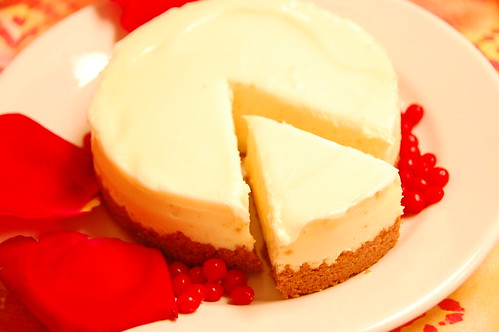
Gluten Free cheesecake by Slacker Mark, under CC Attribution licence
3. Gluten-free food isn't a punishment. 

Some people get really irritated by alternative foods. Creative substitution in food is seen as a 'hippie' fad, and it sparks a strange kind of protectionism in some people: Cakes aren't for you any more, take your rice crackers and begoneA friend once told me about an incident at her work Christmas party when the waiting staff came over with a plate, announcing, 'Gluten-free food for someone here?' and the (drunk) people around the table murmured, 'Urgh, gluten-free?!' They were actually annoyed that someone had dared to be different, even though it wasn't out of choice.

Well, guess what: coeliac disease isn't a curse. It's not a punishment for too many donuts in a past life, so there's no reason for us all to sit crying in a corner while we nibble a lettuce. Not having dietary requirements doesn't make you a hero who has earned those pancakes, any more than coeliac disease means you should rule out bread for life when perfectly good substitutes exist.

To the nay-sayers, tough luck: we coeliacs intend to have our cake, eat it, and lick out the frosting bowl when we're done.